Local SEO in Dallas and Prosper: A Small Business Guide
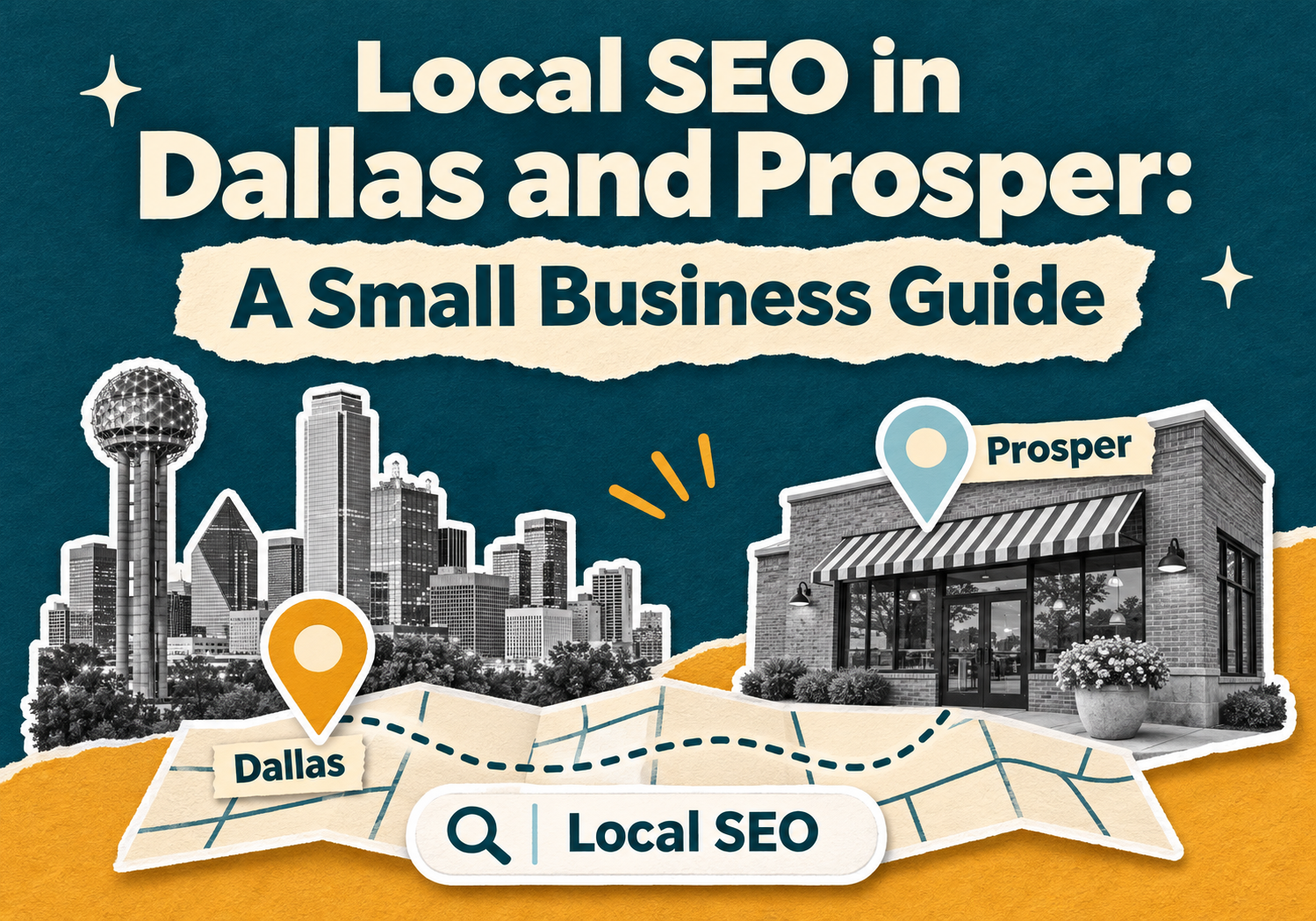
Local SEO in Dallas and Prosper comes down to three things: a complete Google Business Profile, a website that clearly says what you sell and where, and a steady flow of real customer reviews. If you also invest in organic SEO services, the local work is what gets you into Maps and the local results, while the organic work builds the pages and authority behind it. This guide walks through what to fix first, in order. 10Native is headquartered in Prosper, Texas, and this is written for owners in Prosper, Dallas and the towns around them.
What is local SEO for a Dallas or Prosper business?
Local SEO is the work that helps your business show up when someone searches for a service near them, in Google Maps, in the local results block and in regular search results. It matters in this part of Texas because the area keeps changing fast. Census-based estimates compiled by Population Review show Prosper going from 9,724 residents in 2010 to 44,503 in 2024. A lot of people in a growing town are new, and they haven't picked a go-to plumber, dentist or landscaper yet. They search, and they call whoever looks trustworthy.
How does Google decide who shows up in local results?
Google says local results are based mainly on three factors: relevance, distance and prominence. Here is what each one means for you:
- Relevance: how well your profile matches what the person typed. Complete, detailed business info helps Google understand what you do.
- Distance: how close your business is to the searcher, or to the place named in the search. You can't change this one.
- Prominence: how well known your business is. Google says this includes things like links to your website and how many reviews you have, and that more reviews and positive ratings can improve your local ranking.
Google also notes that your position in regular web results is a factor, so standard SEO practices apply to local rankings too. That's why a good profile with a weak website usually stalls.
What should you fix first in your Google Business Profile?
Start with the profile, because it's the fastest thing to improve. Work through this list in order:
1. Claim and verify the profile. Google says verifying tells it you're authorized to represent the business, which makes it more likely to show up.
2. Choose the right primary category. In Whitespark's 2026 survey of 47 local SEO experts, the primary category ranked first out of 187 factors. Pick the one that matches your main money-making service, not the broadest one.
3. Fill in everything else. Add services, hours, a clear description, your phone number and real photos of your work and team.
4. Set your address or service area correctly. The next section covers the rules.
5. Link to the right page. Send the profile to the most relevant page on your site, which is often a service page rather than the home page.
6. Keep it current. Update holiday hours and new services when they change.
How do service-area rules work for businesses around Prosper and Dallas?
If you travel to customers, Google treats you as a service-area business, and it has specific rules. According to Google's help pages, a service-area business can only create one profile for the metropolitan area it serves. If you don't serve customers at your business address, you clear the address field and enter a service area instead. A virtual office doesn't qualify unless it's staffed during business hours.
Two more details trip people up:
- Google doesn't let you set a service area as a distance around your business. You list cities, postal codes or similar areas.
- A hybrid business, such as a shop that also does house calls, can show its storefront address, set its staffed hours and also list a service area.
So a home-based electrician in Prosper would hide the address and list the towns they actually work in. Don't stuff in every town in Collin and Dallas counties hoping to rank everywhere. Listing places you don't really serve invites trouble and doesn't help you rank in far-off searches anyway.
Do you need separate pages for Dallas, Prosper and nearby towns?
Yes, if you truly serve those places and have something real to say about each one. Build one solid page per main service, then add a page for each key town where you want customers. Each page should include details only you can provide, such as typical jobs in that area, a few photos, common questions and a clear way to call or book.
Don't copy one page and swap the town name. Google can spot thin duplicates, and customers can too. If you'd like a model, our Austin Google Maps checklist lays out the same steps for another Texas city.
How do reviews help your local rankings?
Reviews help because Google counts them as a sign of prominence, and they also help the person deciding whether to call you. Google states that more reviews and positive ratings can improve a business's local ranking. In BrightLocal's expert survey, Google Business Profile signals made up about 32 percent of local pack ranking weight and reviews about 20 percent. Those figures are expert opinion, not numbers from Google, so treat them as a guide to priorities.
Here is a simple review routine:
- Ask every happy customer, right after the job, with a direct link to your review page.
- Reply to every review, good or bad, in a calm and specific way.
- Never buy reviews or write your own. It breaks the rules and customers can tell.
How do organic SEO services fit with local SEO?
Organic SEO services build the website side that local SEO leans on: service pages, content, technical health and links from other sites. Local SEO gets you into Maps and the local block. Organic SEO helps you rank in the regular results below it and strengthens the prominence signals Google looks at.
For results beyond the map, the same BrightLocal survey says on-page signals (33 percent) and links (24 percent) carry the most weight in local organic results. In plain terms, your website has to earn its place too. Our organic SEO services guide explains what that work includes, and our piece on how to choose an organic SEO agency lists the questions to ask before you hire.
Search is changing as well. Our post on getting a local business into Google AI Mode covers how clear, accurate business details help there too.
How long does local SEO take, and what should you track?
Most businesses see early movement in a few months, and bigger gains take longer, but it depends on your competition and where you start. Our post on how long organic SEO takes gives a realistic timeline. Nobody can promise a ranking date, so be careful with anyone who does.
Track results that matter to the business, not just rankings:
- Phone calls and direction requests from your profile
- Contact form submissions and booked jobs
- Review count and average rating
- Organic visits to your service and town pages
How can 10Native help with local SEO in Dallas and Prosper?
10Native is a full-service digital agency headquartered in Prosper, Texas. For local businesses we can help with local SEO, Google Business Profile cleanup, service and location pages, SEO content, and website design and development on WordPress or Shopify. We also run the wider digital marketing work if you want one team handling it.
We're honest about the limits. We can't change how close you are to a searcher, we can't guarantee a ranking, and reviews have to come from your real customers. What we can do is fix the things you control, in a sensible order, and show you the numbers.
Ready to talk it through? Call 415 489 9314 or 214 758 7971, or email info@10native.com.
Want more calls from local searches in Dallas and Prosper? Tell us about your business and we'll tell you what to fix first.
Talk to 10NativeFrequently asked questions
What is local SEO for a Dallas business?
How does Google rank local businesses?
Do I need a Google Business Profile if I work from home?
How many service areas can I list for my Prosper business?
Do reviews really affect my local ranking?
Is local SEO the same as organic SEO?
How long does local SEO take to work?
10Native Team
Building resilient enterprise solutions in AI/ML, Data Engineering, Fintech & Digital Marketing.