Why Generic Website Templates Hurt Business Growth
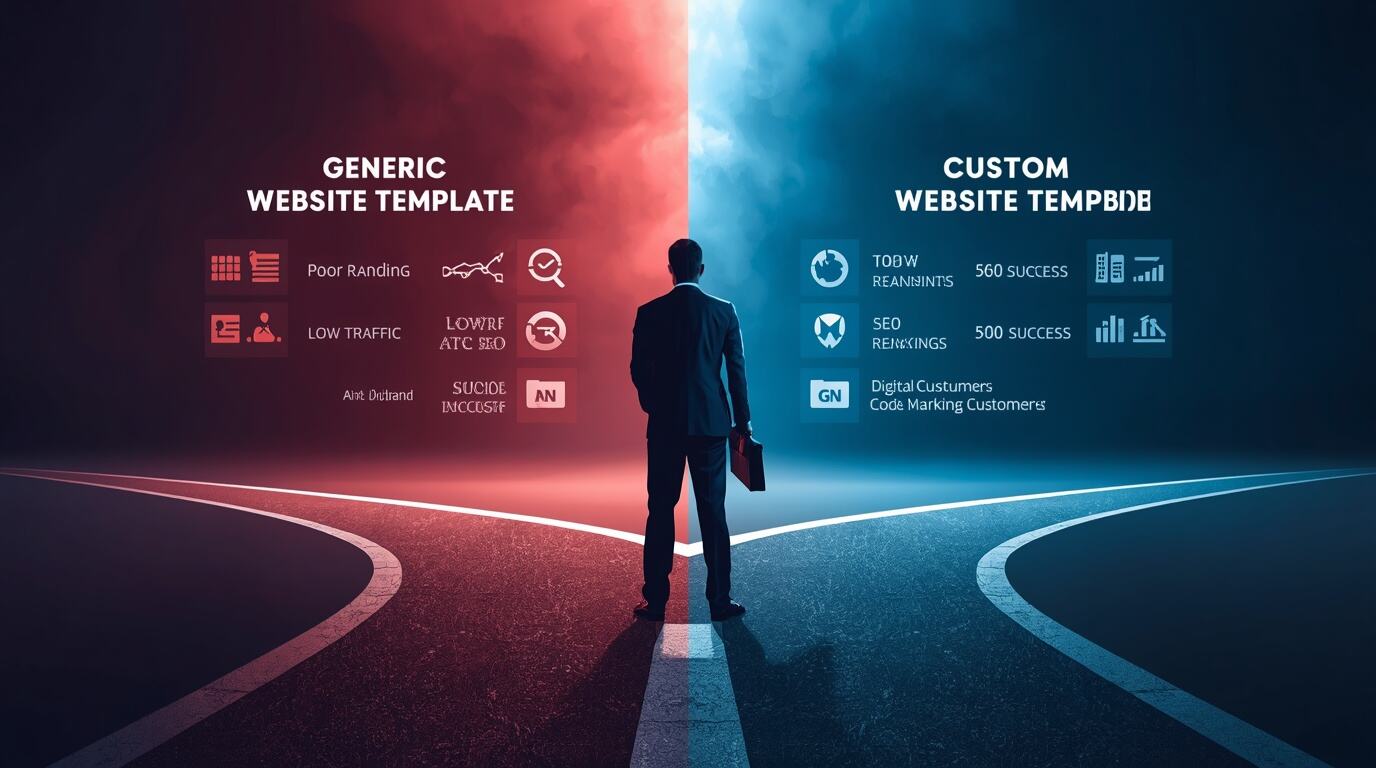
Gone are the days when simply having a website was enough to grow a business.
A founder launches a beautiful website using a popular template. The colors look sharp. The layout feels modern. Traffic starts arriving from ads and referrals. Visitors browse for a few seconds, scroll through the homepage, and then leave. Inquiries never come. Leads stay flat. Sales remain inconsistent no matter how much is spent on marketing.
The business assumes the marketing is broken. It calls in a new agency, doubles the ad budget, and rewrites the copy. Nothing moves the needle. The real issue was never the marketing. It was the foundation the marketing was built on. The website looks like hundreds of others in the same industry. It builds no trust. It creates no differentiation. It offers no memorable experience and gives visitors no clear reason to act. Within seconds, buyers leave and never return.
This is the quiet problem behind thousands of stalled businesses across the United States right now, and it is exactly why custom web design and development services have become the deciding factor between companies that scale and companies that plateau. When a business invests in custom web design and development services, it is not paying for a nicer looking homepage. It is investing in a structural advantage that templates were never built to deliver.
Stop blending in with the crowd. Download our free custom website checklist and discover what generic templates are costing your brand.
Get Your Custom Website ChecklistWhy Templates Make Every Brand Look the Same
Templates are designed for mass reuse, so thousands of businesses end up with nearly identical layouts, spacing, and visual hierarchy, which erases the brand distinction that builds customer trust.
A theme marketplace does not build a template for one business. It builds a template for tens of thousands of businesses across completely different industries, then hopes each buyer customizes enough to feel original. Most do not. They swap a logo, change a color palette, and upload new photos, but the underlying structure, the section order, the button placements, and the interaction patterns stay exactly the same as every other buyer of that theme.
Visitors may not consciously notice this, but their brains register it instantly. Cognitive fluency, the psychological principle describing how easily the brain processes familiar patterns, works against generic websites here. Familiar layouts feel safe in isolation, but when a visitor has seen the same layout on a competitor's site an hour earlier, the fluency turns into suspicion rather than comfort. The brain quietly asks whether this business is legitimate or just another templated storefront with nothing unique to offer.
Custom web design and development services solve this by building an information architecture and visual language around the actual brand rather than around a theme's default assumptions. The layout follows how customers in that specific industry actually think and buy, not how a generic theme predicts an average buyer might behave.
Why Generic Layouts Quietly Destroy Trust
Trust is not built through a single design choice. It accumulates through dozens of small signals working together, and templates fail at nearly all of them simultaneously.
Buyers judge businesses visually before they read a single word of copy. This happens in a fraction of a second, long before rational evaluation even begins. A layout that feels mass produced signals a mass produced business, regardless of how strong the actual product or service is behind it. This is authority bias at work. People assume competence based on presentation, and a templated site quietly communicates that the business did not invest in itself, which makes visitors question whether it will invest properly in them either.
Generic stock photography, default icon sets, and copy-paste testimonial blocks compound the problem. None of these elements are lies exactly, but together they create a pattern recognition failure where the brain files the business under generic rather than credible. Custom web design and development services remove every one of these generic signals and replace them with original photography, brand-specific iconography, and layout decisions that reflect how the business actually operates.
Your template is holding you back—here's proof. Enter your details and get the complete guide to building a website that actually drives business growth.
Send Me the Growth GuideHow Custom Design Builds Credibility Signal by Signal
A custom site earns trust through consistency between what is said and how it looks. Typography that matches the tone of the copy. Color systems that reflect the industry without copying every competitor in it. Micro-interactions that respond the way a careful, detail-oriented company would want them to. None of these choices are accidental on a well-built custom site, and visitors register that intentionality even when they cannot articulate why a site feels more trustworthy.
Why UX Directly Controls Revenue, Not Just Comfort
User experience is not a design luxury. It is the mechanism that decides whether a visitor becomes a lead, so every friction point in navigation, load speed, or clarity directly reduces revenue.
Most business owners still treat UX as a cosmetic layer added after the "real" website is built. This is backwards. UX is the business logic of the website. It determines whether a visitor understands the offer, trusts the company enough to act, and can complete that action without confusion or delay.
Templates create UX problems because their structure was designed for flexibility across industries rather than clarity within one. A theme built to serve law firms, bakeries, and software companies equally well ends up serving none of them precisely. Custom web design and development services flip this. The user journey is mapped around the specific decisions a real customer needs to make, in the order they need to make them, with the friction removed at each step.
This is why decision fatigue matters so much here. Every unnecessary choice, every unclear button, every redundant menu item drains a visitor's mental energy before they reach the actual conversion point. A generic template often has more decision points than a business needs simply because it was built to accommodate every possible use case. Custom development strips that away and leaves only what serves the actual buyer journey.
Why Businesses Lose Leads Without Ever Realizing It
Most lost leads never show up in analytics as a clear failure. They show up as a slightly higher bounce rate, a slightly lower time on page, and a conversion rate that never quite improves no matter what the marketing team tries. This is the silent cost of a templated foundation.
A visitor arrives from a paid ad expecting a specific answer to a specific problem. If the homepage buries that answer under a generic hero banner and three scroll lengths of stock copy, the visitor leaves before the marketing spend even has a chance to pay off. Businesses often respond by blaming the ad creative or the offer itself, when the actual failure point was structural.
Template Site vs. Custom Web Design & Development
| Factor | Generic Template Site | Custom Web Design & Development Services |
|---|---|---|
| Visual differentiation | Shared across thousands of buyers | Built uniquely around the brand |
| Load speed control | Limited by bloated theme code | Optimized frontend and backend architecture |
| Information hierarchy | Generic, one-size-fits-all | Mapped to actual buyer journey |
| SEO & semantic structure | Often shallow or duplicated patterns | Built with semantic HTML and structured data |
| AI search readability | Poor entity clarity | Structured for AI Overviews and LLM retrieval |
| Scalability | Breaks down as the business grows | Built to expand with new features and traffic |
| Accessibility | Frequently overlooked | Designed around WCAG standards from the start |
| Conversion architecture | Default calls to action | CRO-driven layout and messaging |
Why Customers Leave Confusing Layouts Within Seconds
Attention online is not measured in minutes. It is measured in seconds, and often fractions of a second. A visitor lands on a page and makes an almost instant judgment about whether to stay or go. This judgment is driven far more by visual hierarchy than by the actual quality of the offer underneath.
Templates struggle here because visual hierarchy is one of the hardest things to customize well. Most buyers of a theme never touch the underlying spacing, contrast ratios, or eye flow the original designer intended for a completely different type of business. The result is a page where nothing is clearly prioritized, so the visitor's brain, unable to quickly identify what matters most, simply disengages.
Custom web design and development services build visual hierarchy intentionally around the single most important action on each page. Everything else, the navigation, the imagery, the supporting copy, is arranged to support that one goal rather than compete with it.
[CTA text="Is your template killing your credibility? Request a free personalized brand audit and we'll show you exactly where you're losing trust and sales." href="/contact" label="Claim Your Brand Audit]
Why Google Increasingly Rewards Experience Over Appearance
Search engines now evaluate real user experience signals like Core Web Vitals alongside content quality, so a slow, poorly structured template site can actively suppress rankings even with strong content.
Google's ranking systems have moved well beyond keyword matching. Page experience signals, commonly grouped under Core Web Vitals, measure loading performance, interactivity, and visual stability as visitors actually experience them. A theme loaded with unused scripts, unoptimized images, and render-blocking code struggles to hit these benchmarks no matter how good the content sitting on top of it is.
Tools like Lighthouse and GTmetrix expose this gap clearly. A templated site frequently scores poorly on these audits because its codebase was built to look good in a demo, not to perform efficiently at scale. Custom web design and development services address this at the architecture level, with lazy loading for images, deferred scripts that do not block rendering, and a CDN setup that pushes content closer to the visitor for faster delivery.
Search Console data over time tends to confirm the pattern. Sites that fix performance issues at the structural level see more stable rankings than sites that only optimize copy, because the underlying technical foundation was never designed to support strong performance in the first place.
How AI Search Systems Understand Structured Websites Better
AI-driven search tools like Google AI Overviews, AI Mode, and answer engines depend on semantic HTML and structured data to understand and cite a page accurately, and generic templates rarely provide either in a clean, retrievable format.
Search has changed shape. Google AI Overviews, AI Mode, Gemini, ChatGPT, Perplexity, and Copilot are increasingly the first place buyers ask questions rather than typing a query into a traditional results page. These systems do not just crawl text. They parse structure, looking for clear semantic HTML, properly nested headings, and schema markup that tells them exactly what a page is about and how its information relates to other entities on the web.
Generic templates were built years before this shift and generally were not designed with semantic clarity in mind. Headings are often chosen for visual size rather than logical hierarchy. Schema markup is frequently missing entirely or implemented shallowly through a generic plugin that does not reflect the actual business.
Custom web design and development services build semantic architecture from the start. Structured data describing the business, its services, and its offerings gives AI systems clean entities to reference. Answer-first content formatting, where each section opens with a direct summary before expanding into detail, mirrors exactly how these systems extract quotable information for AI Overviews and conversational answers. This is not a minor technical detail anymore. It is quickly becoming one of the biggest differentiators between businesses that get cited by AI search tools and businesses that remain invisible to them.
Why Speed Is No Longer Optional
Every additional second of load time increases the likelihood a visitor abandons the page before it even finishes rendering. This has been well documented across UX research from organizations like the Nielsen Norman Group and the Baymard Institute, and it holds true regardless of industry.
Generic themes tend to load slower because they ship with far more code than any single business actually needs. Every feature the original developer imagined a future buyer might want, every animation library, every unused widget, adds weight that has to be downloaded and processed before the page becomes usable. Custom web design and development services avoid this entirely by building only what the business actually requires, resulting in leaner code, faster paint times, and a smoother first impression.
Why Semantic Architecture Matters More Than Most Businesses Realize
Semantic architecture is the invisible skeleton that tells both browsers and search engines what each part of a page actually means. A properly structured page uses headings, landmarks, and schema in a way that clearly separates navigation from content, content from calls to action, and primary information from supporting detail.
Templates frequently misuse this structure because visual styling is prioritized over meaning. A div might be styled to look like a heading without ever being marked up as one. This might look fine to a human eye but tells search engines and AI crawlers almost nothing useful about the page's true structure. Custom web design and development services correct this from the ground up, ensuring every element carries both visual and semantic meaning at the same time.
Why Custom Websites Convert at a Higher Rate
Conversion is the natural outcome of everything discussed so far working together. Trust signals, clear hierarchy, fast performance, and intentional UX all funnel toward the same outcome, a visitor who understands the offer and feels confident enough to act on it.
Templates rarely align all of these factors simultaneously because they were never built around one specific conversion goal. Custom web design and development services are built backwards from the desired outcome, whether that is a form submission, a phone call, or a completed purchase, with every design decision along the way supporting that single objective rather than diluting it across generic, unfocused sections.
Why Emotionally Intelligent UX Changes Buying Behavior
People do not make purchasing decisions purely on logic. Emotional design, the practice of shaping how a page feels rather than just how it functions, plays a significant role in whether someone trusts a business enough to buy from it.
A generic template struggles here because emotional tone requires nuance. Color psychology, pacing, imagery, and even the rhythm of the copy all need to align with how the target buyer wants to feel while making a decision. A theme built for mass distribution cannot account for this nuance because it was never built with one specific buyer in mind. Custom web design and development services are shaped around the emotional reality of the actual customer, which is why they tend to build trust faster and hold attention longer.
Generic looks = generic results. Grab our proven blueprint to stand out, build authority, and turn your website into a growth engine.
Get the Differentiation BlueprintWhy Design Directly Shapes Perceived Authority
Perceived expertise is one of the strongest predictors of whether a buyer chooses one business over a competitor offering something nearly identical. Design is one of the fastest ways that perception forms, often before a single word of copy is read.
A polished, original, well-structured website signals that the business pays attention to detail everywhere, not just on its homepage. A templated site, even a well-chosen one, signals the opposite by association, simply because visitors have likely seen the same layout used by less credible businesses elsewhere. Custom web design and development services remove that risk entirely by ensuring the site's presentation is inseparable from the brand's own reputation.
Why Templates Quietly Restrict Long-Term Growth
Templates are built on rigid, generalized codebases that become harder and more expensive to extend as a business adds new features, integrations, or traffic, while custom platforms are built to scale from day one.
A template that works well for a small catalog or a simple service page often breaks down the moment a business tries to add a membership system, a complex product configurator, or a custom integration with internal tools. The theme was never designed for that use case, so every new feature becomes a workaround built on top of a foundation that was not meant to support it.
This is where scalable website architecture becomes a real business decision rather than a technical afterthought. Custom web design and development services are typically built with API-first development principles, meaning new features, integrations, and platforms can be added without tearing apart the existing foundation. Backend scalability is planned from the beginning rather than patched in later under pressure.
How 10Native Approaches Custom Websites Differently
10Native builds websites the way a long-term growth partner would, not the way a template marketplace would. Every project begins with a genuine understanding of the business, its buyers, and the specific friction points standing between a visitor and a decision.
That process typically includes semantic SEO integration built into the architecture from day one, performance-first development that treats Core Web Vitals as a baseline rather than an afterthought, and conversion-focused UX shaped around real buyer psychology rather than generic best practices copied from a blog post. Accessibility is treated as a core requirement rather than a compliance checkbox, following WCAG guidelines so the site works well for every visitor, not just the majority.
10 Native also builds with AI visibility in mind, structuring content and markup so it can be understood cleanly by AI Overviews, AI Mode, and conversational search tools, alongside traditional organic rankings. Alongside full custom web design and development services, 10Native also supports businesses through affordable web design and development for companies earlier in their growth, custom ecommerce web design services for Shopify and WordPress-based stores, wordpress web development company support for businesses needing a more structured CMS foundation, and b2b web design services built around longer, more considered buying cycles.
For brands needing more than a website, 10Native offers creative graphic design services, animated video production services, and 3d logo design services that extend the same custom, trust-first approach across the entire brand experience, along with some of the Best Digital Marketing services at 10 Native for businesses ready to pair a strong website with sustained growth.
Why Most WordPress Websites Fail to Convert Visitors Into Customers
A large share of WordPress sites are built on top of prebuilt themes stacked with page builder plugins, and the result is often a bloated, slow-loading site with conflicting design systems patched together over time. Even strong content struggles to convert when it sits inside a structure like this. A custom-built WordPress foundation, developed intentionally rather than assembled from plugins, avoids this problem entirely and gives the CMS flexibility WordPress is known for without sacrificing speed or clarity.
15 Shopify Design Mistakes That Kill Ecommerce Sales
Ecommerce stores face their own version of this problem. Common mistakes include cluttered product pages, unclear shipping information, slow-loading product images, generic theme checkouts that feel disconnected from the brand, weak mobile navigation, missing trust signals near the buy button, inconsistent typography across pages, poor product filtering, unclear return policies, oversized hero banners that push products below the fold, missing schema for products and reviews, slow app-bloated themes, unclear calls to action, weak internal linking between related products, and generic photography that fails to differentiate the brand from competitors selling the exact same items. custom ecommerce web design services address these systematically rather than patching them one at a time.
Your business deserves more than a one-size-fits-all template. Fill out the form and get the strategies to design a site that truly works for you.
Unlock Your Business PotentialHow 2026 Is Redefining Ecommerce Website Design and Development
Ecommerce in 2026 is shaped heavily by AI-assisted shopping behavior, where buyers increasingly research products through conversational tools before ever visiting a store directly. This makes structured product data, clear semantic markup, and fast, accessible design more important than ever, since these are exactly the signals AI shopping assistants rely on to recommend one store over another. Businesses still relying on generic, unoptimized templates risk becoming invisible in this new layer of AI-driven discovery, regardless of how strong their actual products are.
What Business Owners Should Expect From a Custom Web Design Agency
A genuine custom web design and development services partner should start with discovery, not design. Expect real questions about the business model, the buyer journey, and existing performance data before a single mockup is created. Expect transparency about timelines, a clear technical plan covering hosting, performance, and scalability, and a design process grounded in the actual brand rather than a swipe file of trending templates. Expect measurable outcomes tied to conversion and search visibility, not just aesthetic sign-off.
Where Custom Web Design and Development Services Matter Most Across the US
Businesses in competitive markets feel this gap the fastest. In New York and Los Angeles, saturated service and retail markets punish generic presentations almost immediately. In Chicago and Dallas, established B2B buyers expect a level of polish that signals long-term stability. In Austin and Seattle, tech-forward audiences notice performance and UX details that slower-moving industries might overlook. In Miami and Atlanta, fast-growing consumer brands need differentiation to stand out in crowded local markets. In Houston, Denver, Nashville, and San Francisco, businesses across energy, healthcare, hospitality, and technology are increasingly treating their website as core infrastructure rather than a marketing afterthought, which is exactly the mindset custom web design and development services are built to support.
Frequently Asked Questions
Should I use a website template or a custom website?
If the business plans to grow, run paid marketing, or compete on trust and search visibility, a custom website almost always performs better long term, since templates are built for general use rather than a specific brand's growth path.
Do custom websites rank better than templates?
Custom websites generally have stronger technical SEO foundations, including cleaner semantic structure, faster performance, and better Core Web Vitals scores, all of which are direct ranking factors search engines evaluate.
Are template websites hurting my business?
A template alone is not automatically harmful, but if it is slow, generic, and unoptimized for search or AI visibility, it is very likely limiting both conversions and discoverability without the business realizing it.
Are website templates bad for SEO?
Not inherently, but most templates come with bloated code and shallow semantic structure that make strong technical SEO harder to achieve compared to a custom-built foundation.
Are templates hurting conversions?
Yes, in most cases, because templates are designed for broad reuse rather than the specific psychology and journey of one business's actual buyers.
Why do businesses outgrow templates?
As a business adds features, integrations, or traffic, a template's rigid, general-purpose structure becomes a limitation rather than a convenience, often requiring a full rebuild anyway.
Are custom websites worth the investment?
For businesses relying on their website as a real growth channel, yes, since the return typically shows up through higher conversion rates, stronger search visibility, and long-term scalability rather than upfront savings.
When should a business consider a redesign?
When bounce rates are high, load times are slow, mobile experience feels clunky, or the site no longer reflects how the business has evolved, it is usually time to move away from a templated foundation.
Conclusion
A website is not a digital brochure. It is a business asset that either builds momentum or quietly holds a company back every single day it stays online. Templates promise speed and savings up front, but the real cost shows up later, in lost leads, weak search visibility, and growth ceilings that are difficult to see until a business tries to push past them.
Custom web design and development services exist for exactly this reason. They replace guesswork with intention, generic patterns with real differentiation, and short-term convenience with a foundation built to scale. Businesses that make this shift early do not just get a better looking website. They get a structural advantage that compounds over time, in search rankings, in AI visibility, and in the simple, human moment when a visitor decides whether to trust them or move on to someone else.
The businesses winning right now are not necessarily the ones spending the most on ads. They are the ones whose websites were built to earn trust the moment someone arrives. That is the real difference custom web design and development services make, and it is the difference worth investing in before the next visitor leaves and never comes back.
Every great brand has a unique identity. Share your details and we'll send you the roadmap to break free from templates and accelerate your growth.
Start Growing Beyond Templates10Native Team
Building resilient enterprise solutions in AI/ML, Data Engineering, Fintech & Digital Marketing.