Organic SEO Services: How to Tell If They Are Working
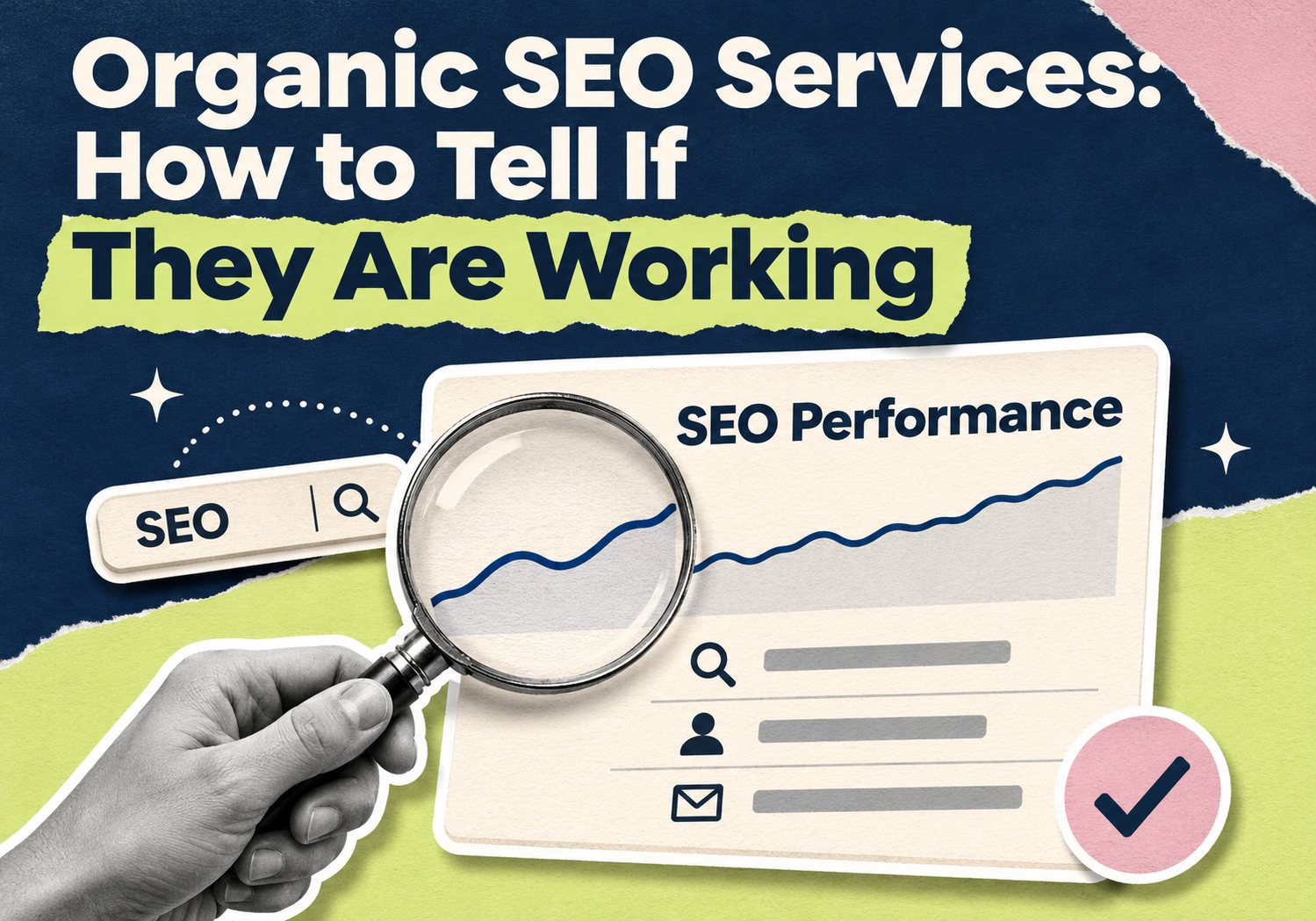
You pay for organic SEO services, the reports arrive every month, and you still can't tell whether any of it is working. That's a common spot to be in, and it's rarely your fault. Most reports lead with big numbers that look good and say very little about sales.
This guide shows which numbers matter, which ones mislead, and how to read a Search Console report like a business owner instead of a marketer. If you want the bigger picture first, start with our guide to organic SEO services in the USA.
How can you tell if your organic SEO services are working?
Watch four things in order: more search terms showing your site, better positions on the terms tied to what you sell, more clicks to the pages that matter, and finally more calls and form fills. Each step usually shows up before the next one, so early progress looks like impressions and rankings, not leads.
Here is the order to expect:
1. Visibility grows. Your site shows up for more of the searches your customers use.
2. Positions improve. The pages you are targeting move up for specific queries.
3. Clicks follow. More people land on those pages.
4. Leads follow clicks. Calls, quote requests and form submissions rise from organic visitors.
If your agency only shows you step one, ask when steps two to four should start and how they will prove it.
What do impressions, clicks and position mean in Search Console?
Google Search Console is the free tool that shows how your site performs in Google Search. Its three headline numbers have specific meanings, and they are not what most people assume.
- Impressions: a person saw, or could have seen, a link to your site. In general it counts when your result is on the results page, even if the person never scrolled down to it.
- Clicks: a person left Google and went to your page.
- Average position: Google records the highest position your site held for each query, then averages those across all queries. A reported position of 5 does not promise you appear fifth for every searcher, because results vary by person and context.
That last point matters. Because impressions can count without anyone scrolling, a page sitting on page two can collect lots of impressions and almost no clicks. It is not a bug. It just means you are visible but not yet easy to find.
Is ranking on page two a sign that SEO is working?
It can be, but only if the trend is moving up. Positions from about 11 to 20 usually mean page two. Moving from position 45 to position 18 on a query that matters to your business is real progress, even though clicks stay low for now.
The question to ask is whether the same pages are climbing on the same queries from month to month. A site that sits at position 18 for six months with no change is not progressing, no matter how many impressions it shows.
What should a monthly organic SEO report include?
A useful report ties the work done to movement on specific queries and, over time, to leads. Ask for these six items:
1. Target queries with position trends. A short list of search terms tied to your services, shown month by month. Query level beats a single site-wide average.
2. Clicks and impressions for your money pages. Service pages, product pages and location pages, not just the blog.
3. Organic leads. Calls, forms and quote requests that came from organic search, tracked in your analytics.
4. Work completed. Pages published or updated, technical fixes, and any links or mentions earned, with dates.
5. Problems found. Indexing issues, slow pages, broken links, and what was done about them.
6. Next month's plan. What will be done and why.
If you can't connect a number in the report to a task that was completed, ask what changed and why.
Which SEO numbers can mislead you?
Some numbers feel good and tell you little. Be careful with these:
- One site-wide average position. It blends hundreds of queries, so one strong brand search can hide weak rankings everywhere else.
- Total impressions with brand searches included. People searching your business name were already looking for you. Split brand from non-brand.
- Checking rankings yourself. Google results vary by person and context, so what you see may not match what customers see.
- Keyword counts. Ranking for 500 irrelevant terms is worth less than ranking for 10 terms that bring buyers.
- Traffic with no leads. Visitors who never call, buy or fill in a form are a vanity number.
Should you judge your SEO during a Google core update?
Not until it finishes. Google began rolling out the November 2026 core update on November 10, 2026, and said the rollout may take up to two weeks. Google described it as a regular update meant to better surface relevant, satisfying content.
Rankings can move up and down while an update rolls out. Wait until the rollout is complete, then compare against the weeks before it. Avoid rewriting your whole site because of a dip in the middle of an update. Our note on the November 2026 core update for small businesses explains what to check once it settles.
How long should organic SEO services take to show results?
There is no fixed timetable. It depends on how competitive your search terms are, how old your site is, and how much needs fixing first. Our guide on how long organic SEO takes goes deeper.
What a good provider can do is tell you what to expect at each stage for your site: first the fixes and indexing, then visibility and rankings, then clicks and leads. If an agency promises a ranking on a date, treat that as a warning sign. Nobody outside Google controls rankings. If you are still comparing providers, read how to choose an organic SEO agency or consultant.
How can 10Native help you measure and improve organic SEO?
10Native is a Texas LLC headquartered in Prosper, Texas, with a sub-office in Warner Robins, Georgia and a production center in Karachi, Pakistan. Our digital marketing services cover organic SEO, local SEO, and AEO and GEO content, which is content written so AI search features can quote it clearly.
For this exact problem, we can:
- Review your current Search Console and analytics data and explain it in plain language.
- Pick the search terms that match what you actually sell, and track them by query.
- Fix the technical and content gaps holding your key pages back.
- Build or refresh service, product and location pages, including for Shopify stores.
We can't guarantee rankings or a specific result, because Google decides that. What we can do is show you what is moving, what isn't, and why.
Ready to see whether your SEO is really working?
Send us your current report and the last 90 days of Search Console data, and we will tell you what the numbers say. Call 415 489 9314 or 214 758 7971, or email info@10native.com.
Not sure your SEO report adds up? Send it to us and get a plain-language read of what is working and what is not.
Talk to 10NativeFrequently asked questions
How do I know if my organic SEO is working?
Why do I get impressions but no clicks in Search Console?
What does average position mean in Search Console?
Is position 15 good for organic SEO?
Should I worry if my rankings drop during a Google update?
What should I ask my SEO agency to report every month?
Can an SEO company guarantee rankings?
10Native Team
Building resilient enterprise solutions in AI/ML, Data Engineering, Fintech & Digital Marketing.